Abandoned vehicles in HOA communities present many problems. They are not only an eyesore, especially when they deteriorate or gather dust, but also pose environmental and safety risks. Yet, associations must first understand their authority before hiring a tow company.
What Counts as Abandoned Vehicles in HOA Communities?
In general, an HOA considers a vehicle abandoned if it has been left stationary in a common area or on a street for a set period, is unregistered, or is obviously nonfunctional.
Associations have differing definitions of what constitutes an abandoned vehicle. Some base it entirely on how long a vehicle has been left stationary, while others consider a vehicle abandoned if it has expired tags or broken windows.
In Virginia, Section 46.2-1200 defines an abandoned vehicle as one that has remained on a private property for more than 48 hours without the owner’s consent. Associations can use this as a basis and build from there.
When Should an HOA Tow Abandoned Vehicles?
An association’s towing policy should outline the conditions for towing, which typically includes a timeframe requirement and due process.
Most communities tow after a set period, such as when a vehicle is left on private property, in a common area, or on the street for more than 48 hours. The association must then follow due process, including sending notice, before towing the vehicle. Furthermore, the HOA must post visible signs showing that unauthorized parking is prohibited in these areas.
How Can an HOA Remove Abandoned Vehicles?
To remove abandoned vehicles in HOA communities, the board must follow due process. This typically includes sending a violation notice and imposing fines, but some jump straight to towing as long as the towing policy allows it.
1. Send Notice of Violation
Depending on the parking rules, an HOA usually first sends a formal violation notice to the owner of the abandoned vehicle. In lieu of a notice, some HOAs place a warning tag on the vehicle. The tag or notice provides a specific timeframe for the owner to move their car from the spot.
2. Impose Fines or Other Penalties
If the owner ignores the warning, the association may levy fines after an opportunity to request a hearing. Typically, associations impose daily or cumulative fines on the vehicle owner. These fines accumulate until the owner complies with the rules.
3. Tow the Vehicle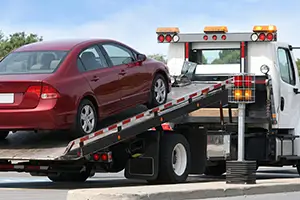
If the owner fails to remove the vehicle after the notice period, the HOA may have it towed and impounded. The owner is usually responsible for the related costs, provided the association’s governing documents expressly allow it.
Can an HOA Tow Without a Disciplinary Hearing?
Depending on the association’s policies, it may not need to provide an opportunity to be heard before towing an abandoned or improperly parked vehicle.
In general, an HOA must first provide written notice and a chance for a disciplinary hearing before levying fines in Virginia. That said, in the case of abandoned vehicles, an association can typically tow a vehicle without a hearing if its towing policy permits it. It can also tow the vehicle if it is in immediate violation of parking rules.
Moreover, Section 46.2-1231 of the Virginia Code lets an HOA bypass the formal hearing process and skip to towing if it meets the following conditions:
- The HOA must post clear signage at all entrances and tow-away zones. This sign must be conspicuous and visibly state that unauthorized parking is prohibited. The sign must also provide the towing operator’s contact details.
- The association’s governing documents must explicitly outline the parking restrictions.
- The HOA board or management company serves as the authorized agent to initiate the tow.
Abandoned vehicles can be tricky to deal with. Since they have been deserted, it’s often difficult to contact the owners.
Guidelines for Handling Abandoned Vehicles in HOA Communities
Towing vehicles might seem extreme, but it is sometimes necessary to keep the neighborhood clean and safe. Association boards must learn how to manage abandoned vehicles by implementing the strategies below.
1. Check the Governing Documents
First, board members must review their governing documents to verify the HOA’s abandoned vehicle rules. It is important to review specific wording, such as proof of non-movement, expired registration, or inoperability. The board must meet these criteria before it can take further action.
2. Understand Public vs Private Roads
Whether an association has authority over a particular street depends on its ownership. Associations have limited to no authority, for instance, on public roads, as these are owned by the city or municipality. For abandoned vehicles in these areas, the HOA may need to contact its local government agency.
On the other hand, associations have broader authority over private roads. For abandoned vehicles in these areas, the HOA can typically regulate or tow them if certain conditions are met.
3. Avoid Illegal Towing
Illegal tows can result in legal problems for the association, not to mention regulatory fines. Board members must strictly follow due process in accordance with state laws and the governing documents. If the HOA skips even a single step, the vehicle owner may challenge the move.
4. Hire a Towing Company
Before towing an abandoned vehicle in condo parking or HOA common area, boards must hire a licensed towing operator. This operator must comply with Virginia towing laws, including the proper display of “Tow-Away Zone” warning signs. These signs must also provide the operator’s contact information.
Avoiding Problems for the HOA
Improper handling of abandoned vehicles in HOA communities can result in regulatory penalties and legal exposure. Associations must comply with state laws and the governing documents before initiating a tow. When in doubt, it is best to consult an attorney or HOA management company.
Keymont Community Management offers expert management services to associations in Virginia, Maryland, and Washington, DC. Call us today at 703.752.8300 or request a proposal to start your journey!
RELATED ARTICLES:
- What Is An Executive Session And When Can An HOA Board Use One?
- How Much HOA Fee Is Too Much? Factors Boards Should Review First
- 13 Common Issues In A HOA That The Board Must Be Ready For