Board members must understand homeowners’ rights to conduct an HOA records inspection. State laws typically protect this right, allowing owners access to certain records. That said, not all records are available for owner examination, as the board may withhold confidential information.
Virginia Law on HOA Records Inspection

Homeowners associations keep all sorts of documents as part of their operations. From meeting minutes to financial statements, these records detail the association’s history and condition.
Naturally, homeowners would want to review these documents from time to time. After all, they want to know that their dues are being used properly and that the board is managing the community well.
But can homeowners even inspect HOA records? The answer depends on state laws and the governing documents. In Virginia, Section 55.1-1815 (for HOAs) and Section 55.1-1945 (for condos) protect owner rights to examine and copy association records.
Here’s what owners and board members must know about HOA records inspection in Virginia.
Good Standing
Virginia law stipulates that a homeowner must be in good standing to request records for review. Good standing generally means that the owner has no outstanding debt to the association and has no pending violations.
Proper Purpose
When it comes to HOA records inspection, Virginia law requires owners to have a proper purpose related to the association or membership. This means owners can’t view the records as part of commercial solicitation.
Written Notice
In general, owners must provide written notice to the association. This formal letter should include the list of records the owner wishes to examine and what purpose it will serve. Depending on whether the association is self-managed, the board may ask the owner to provide notice in advance.
Some associations make the process easier, no longer requiring a handwritten or typed letter. Instead, they make owners fill out a form with all pertinent details. The form can then be submitted via email or through an owner portal.
When requesting records, owners should be specific about what documents they wish to view. An owner can’t just ask for “financial records” because this is too general. Requests like that can delay the process, as the board or manager would need to follow up for clarification.
Timing
Virginia law sets certain timing requirements for HOA record inspections. Homeowners may inspect records during reasonable business hours or at a convenient time or place agreed to by both parties. Owners must also give associations sufficient time to respond after they provide written notice of the request.
Documents Available for HOA Record Inspection
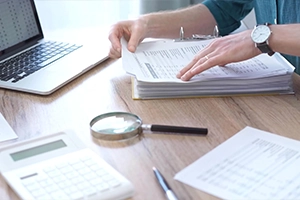
Homeowners can generally request the following documents:
- Operating budgets
- Financial reports, including general ledgers
- Bank statements
- Bank reconciliations
- Reserve studies
- Reserve account summaries
- Invoices and receipts
- Audits or financial reviews
- Account balance and payment history (of the requesting party)
- Governing documents
- Meeting minutes, including annual meetings, board meetings, and special meetings
- Board resolution
- Committee reports
- Membership lists
- Executed vendor contracts
- Existing insurance policies
Documents Not Available for HOA Records Inspection
Board members can generally withhold certain records from homeowners when they are confidential or sensitive. These records typically include:
- Personnel or employment records, including disciplinary records, performance evaluations, and payroll
- Medical or health information of residents or employees
- Attorney-client correspondence
- Pending or potential litigation records
- Executive session meeting minutes
- Delinquency or violation records of other owners
- Personal contact information
- Contracts under negotiation or still unsigned
Some documents may not be entirely confidential, with only some parts being private. In that case, the board can still accommodate the request by redacting the protected information. This is according to Virginia law.
Can an HOA Charge for Access to HOA Records in Virginia?
An association might ask an owner to pay a fee for the examination of records. Homeowners must not be surprised, as Virginia law does allow this.
According to Section 55.1-1815 (for HOAs) and Section 55.1-1945 (for condos), associations can charge reasonable costs that cover the materials and labor. Of course, these costs must be tied to the HOA records inspection request.
That said, association boards may not charge arbitrary fees. Instead, they must adopt a cost schedule that applies fairly and equally to all members of the association. Fees can also cover the cost of redacting confidential information.
Can the Board Deny Disclosure of HOA Records?

Whether or not an HOA board can deny access to records depends on what those records are. In general, confidential documents are not subject to owner examination. These include employment records, medical information, delinquent owner lists, and pending litigation.
That said, if only a portion of the document is sensitive, the board does have a workaround. Virginia law stipulates that boards must redact the private information and make the rest of the document available for owner inspection.
If an owner finds that their request has been denied without justification, they have a few options:
1. Talk to the Board
Sometimes, it’s all a matter of miscommunication. The owner can approach the board or manager directly and ask why their request was denied. The board may ask the owner to revise the request with corrections before complying with it.
2. Emphasize State Law
Virginia law protects owners’ right to inspect certain records. If the board refuses to comply with a reasonable request, the owner can file a complaint and point out the specific law that applies.
3. Enter Alternative Dispute Resolution (ADR)
Owners can ask the board to enter mediation or arbitration to resolve the issue. In mediation, the mediator seeks to reach a compromise between the parties, resulting in a win-win outcome. In arbitration, on the other hand, the arbitrator makes the final decision. This often results in a win-lose situation.
4. Take Legal Action
As a last resort, the owner can sue the association for failure to comply with a legal request for records. In some cases, a court may even find board members personally liable if they acted with malicious intent or willful neglect.
The Board’s Duty
Navigating HOA records inspection requests can be challenging for volunteer boards. It is imperative to understand owners’ rights under state law and what owners can legally examine. Boards must also know the extent of their authority. In doing so, they can promote transparency and avoid liability.
Keymont Community Management offers expert HOA management services to associations in Virginia, Maryland, and Washington, DC. Call us today at 703.752.8300 or request a proposal to start your journey!
RELATED ARTICLES:
- Know the Rules: Virginia HOA Laws Every Resident Should Understand
- HOA Disclosure Documents Every HOA Should Have
- HOA Meetings: How Boards Should Prepare For Productive Meetings