Many boards struggle to address hoarding in HOA communities, especially since it can be a sensitive topic. But hoarding can lead to health and safety risks, so it shouldn’t be left alone either. Fortunately, there are steps the board can take to handle hoarding with professionalism and care.
The Risks of Hoarding in HOA
Hoarding occurs when a person is unable to discard belongings, resulting in an accumulation of items and clutter in their living space. Hoarders can collect everything from newspapers and magazines to clothes and cardboard boxes. Some even hoard food or animals.
Compulsive hoarding comes with several consequences. It affects a person’s physical, financial, and emotional well-being. For the HOA community, hoarding can have legal repercussions, too.
Hoarding comes with health and safety concerns for the association and its members. Newspapers, magazines, and cardboard boxes are flammable. A single spark can lead to disaster and affect neighbors as well.
Hoarded items can also produce a foul smell. Food can decay, trash can accumulate, and clothes can get dirtied over time. In addition to the odor, these items can encourage mold growth and attract pests. These issues won’t be confined to one household, as they can easily spread to other units or homes.
Left unchecked, hoarding can spiral out of control. Items can spill over the outside of the unit, creating an unsightly mess. Because of hoarding, buyers may feel hesitant to move into the community.
How to Address Hoarding in HOA Communities
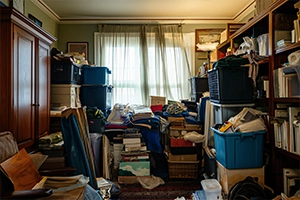
When addressing hoarding, boards should never force their way into a unit or home without authority. Board members also shouldn’t try to diagnose someone with this condition. Furthermore, it is illegal to demand medical or personal information.
Instead, boards should follow the steps below to handle hoarding in HOA communities.
1. Check Governing Documents
First, the board should make sure that the governing documents include safeguards against hoarding. While it is discriminatory and illegal to prevent hoarders from moving into the community, boards can enforce guidelines to help protect the association.
A good way to do this is to prohibit behaviors or actions that put other residents in danger or cause property damage. If the governing documents do not yet reflect such provisions, the board should consider amending them.
2. Document Violations

Documentation is key to fighting hoarding. The board should document all visible safety risks or violations of the governing documents. This will help strengthen the association’s case and come in handy should things escalate to litigation.
3. Talk to Them First
Before pursuing other methods, it is vital to speak to the alleged hoarder first. Let them know that the visit is due to reports from their neighbors. If there’s no hoarding issue, then they will easily allow the board member to enter their home. It might not even be hoarding at all, but simply failing to clean their house.
On the other hand, if there’s evidence of hoarding, board members should refrain from making accusations. Instead, remind the homeowner of the community’s rules to keep homes clean and well-maintained. Keep in mind that boards can’t force their way inside a resident’s home.
4. Send an Official Letter
If talking to the alleged hoarder doesn’t work, it’s time to send an official letter. This letter should detail the neighbor complaints the board received regarding the owner’s behavior. It should also reflect the violations committed and any supporting documentation.
Boards should provide a deadline for the owner to remedy the situation. The letter should also indicate any potential penalties the owner may incur if they fail to meet the deadline.
5. Follow Enforcement Methods
If the owner fails to clean up by the deadline, the board can proceed with enforcement actions. These include charging a fine, suspending the owner’s privileges, and even legal action. Of course, the board should follow all requirements and procedures outlined in its governing documents and state laws.
6. Contact Law Enforcement
If all else fails, the board should consider reaching out to local code enforcement or fire officials. This is usually the best option if the risks have already escalated.
Are There Hoarding Laws in Virginia?
While there are no laws in Virginia that specifically address hoarding, it is important to note that hoarding is recognized as a mental disorder or disability under the Fair Housing Act. This means associations can’t deny or remove owners for exhibiting hoarding behaviors. In fact, they can ask for reasonable accommodations due to their disability.
That said, hoarding can indirectly violate health and safety codes. Infestations, blocked exits, fire hazards, and other citations can compel enforcement. Boards should follow proper and legal procedures to deal with hoarding in HOAs.
How to Identify Hoarders in an HOA

Hoarding is not always easy to identify. A messy home doesn’t always mean the resident is a hoarder. Sometimes, people just don’t have the time or energy to clean up.
Here are the signs to look for to help pinpoint hoarders.
1. Look for Exterior Signs
In most hoarding situations, there are visible cues that give them away. These signs often appear outdoors when clutter from inside spills over. If there’s not enough room indoors anymore, hoarded items might make their way to common or limited common areas.
Look for clutter or piles of items on patios and balconies. Check for any blocked entryways or windows. Stored furniture, appliances, and boxes outdoors can also indicate hoarding.
All of these can create fire hazards and attract pests. Moreover, they might violate the association’s maintenance rules.
2. Monitor for Odors or Pest Complaints
Residents might report strong or foul odors coming from a home or unit. Neighbors might also notice more pests such as roaches, rodents, and flies. Boards should track these complaints as they can indicate hoarding in the community.
3. Identify Repeated Violation Patterns
Boards might notice the same resident receiving multiple maintenance or storage violations. Because hoarders don’t typically correct these issues completely, items can quickly pile up again, leading to repeated violations.
4. Check for Clutter Visible Through Windows
In some cases, interior clutter can be so severe that it’s visible from the outside. This can signal hoarding behavior, but boards should approach these situations with caution. Board members can’t invade someone’s privacy, and more evidence may be necessary before they can take action.
Handle With Care
Hoarding in HOA communities can be a tricky issue to navigate, especially with fair housing and disability laws to take into account. Board members must exercise care when dealing with these situations, as the smallest misstep can lead to disastrous consequences for the association.
Keymont Community Management offers expert management services to associations in Virginia, Maryland, and Washington, DC. Call us today at 703.752.8300 or request a proposal to start your journey!
RELATED ARTICLES:
- Handling HOA Violations: A Guide For Virginia HOA Boards
- POA vs HOA vs COA: What’s The Difference?
- Know the Rules: Virginia HOA Laws Every Resident Should Understand